Time Fraud Explained: Definition, Examples, and Prevention

Time fraud, more formally known as timesheet fraud or time theft, is when an employee receives pay for work time they did not actually perform. Under U.S. law, most incidents are treated as employee misconduct rather than a crime. Deliberate falsification of records, however, can cross into criminal territory, particularly when it involves government contracts or materially distorts payroll and financial reporting, as Forbes Advisor notes.
Lexicographers point out that “time fraud” is often used as a shorthand for timesheet fraud, emphasizing deliberate falsification over incidental nonproductive time. You will see the behavior described under several names:
- Time theft (broadest term, covers any paid nonwork time)
- Timesheet fraud (emphasizes falsified records)
- Timecard fraud (same concept, different document)
- Padding hours (inflating time entries)
- Buddy punching (a specific method using a coworker to clock in)
Statistic: Practitioner summaries referencing the Association of Certified Fraud Examiners put the average occupational fraud loss at roughly significant financial losses per incident, which helps explain why employers treat even small patterns of time manipulation seriously.
Key Takeaways
Time fraud is deliberate manipulation of work-time records to receive unearned pay, and while most U.S. cases are handled as employee misconduct, systematic falsification can lead to termination, civil clawbacks, or criminal charges.
| Point | Details |
|---|---|
| Core definition | Time fraud means receiving pay for work time not actually performed, whether through falsified records or on-the-clock nonwork activity. |
| Top prevention steps | Write a clear time-tracking policy, require manager approvals within 24 hours, and use tools with GPS geofencing and photo verification. |
| Best detection methods | Exception reports and output-to-time comparisons catch patterns; GPS and photo verification catch individual incidents at clock-in. |
| Legal escalation threshold | Criminal charges typically require a deliberate pattern, falsified records, and material financial harm, especially in government-contract or payroll-embezzlement cases. |
| When to act | If you uncover suspected fraud, preserve audit trails immediately and follow your written disciplinary policy before making any payroll adjustments. |
Table of Contents
- What time fraud actually covers, and why intent matters
- 8 common forms of time fraud you should recognize
- How employers detect time fraud in practice
- How to prevent time fraud with policy, culture, and tools
- When time fraud becomes criminal: cases and legal thresholds
- What to do if you’re accused or if you uncover suspected fraud
- A practical note for small-business owners and employees
- Sources
What time fraud actually covers, and why intent matters
The core of any time fraud definition is a gap between recorded time and actual work performed. That gap can show up three ways: an employee clocks in but does personal tasks on company time, submits a timesheet with inflated hours, or records shifts that never happened.
Intent is what separates an honest mistake from fraud. A worker who forgets to clock out and rounds up by five minutes has made an error. A worker who consistently adds 30 minutes to every shift, or who asks a coworker to clock them in while they are still in the parking lot, is making a deliberate choice. That distinction matters in HR proceedings and, in serious cases, in court. Accidental errors are corrected with a conversation; deliberate falsification can end in termination, civil clawbacks, or criminal charges.
The scale matters too. A single inflated entry is a policy violation. A pattern of falsified records over months, especially one that affects payroll totals or financial reporting, is the kind of scheme that prompts legal counsel and law enforcement involvement.
8 common forms of time fraud you should recognize
Understanding the specific behaviors that fall under timesheet fraud makes it far easier to spot them. These are the forms employers encounter most often, along with a quick real-world picture of each.
- Buddy punching. A coworker clocks in on behalf of an employee who has not yet arrived. Common in restaurants and construction sites where a shared time clock is the only check.
- Padding or inflating hours. An employee records 9 hours on a shift that ran 7.5. Over a 40-hour week, that adds up to several hundred dollars in unearned wages per month.
- Falsified or pre-filled timesheets. An employee fills in a paper or digital timesheet before the shift ends, then leaves early. The record looks complete; the work is not.
- Extended or unauthorized breaks. A 30-minute lunch becomes 75 minutes, but the clock-out and clock-in are recorded as 30. The lost time is invisible unless a manager is watching.
- Cyberloafing. An employee spends two hours of a paid shift on personal social media, streaming, or online shopping. No record is falsified, but the employer is paying for time that produced nothing.
- Ghost shifts. A manager or employee creates a shift for a worker who never shows up, then approves the hours. This is payroll fraud and often involves collusion.
- Dual-claiming time. A contractor or remote worker bills two clients for the same hours. Both clients pay for 100% of a block of time; only one actually received the work.
- Misusing mobile or GPS clocks. An employee clocks in from home using a mobile app, then drives to the job site. The timestamp says they were on-site; the GPS data says otherwise.
For a deeper look at how these tactics play out in hourly-staffed workplaces, common time fraud tactics break down each behavior with business-impact context.
| Form | Typical financial exposure |
|---|---|
| Buddy punching | Unearned wages per affected shift |
| Inflated hours | Cumulative payroll overcharge over weeks/months |
| Ghost shifts | Full shift wages for zero work performed |
| Dual-claiming | Double billing across two clients or contracts |
How employers detect time fraud in practice
Detection works best when it layers multiple methods, because no single check catches everything. FirstHR’s guidance on time card fraud identifies exception reports, manager approvals, output-to-time comparisons, and geo/photo verification as the most consistently effective tools when applied together.
| Detection method | What it finds best | Typical evidence | Limitations |
|---|---|---|---|
| Exception reports | Unusual clock patterns (late edits, overtime spikes) | System-generated log of anomalies | Requires a baseline to compare against |
| Output-to-time comparison | Mismatch between hours logged and work delivered | Project records, sales data, task logs | Harder to apply to support or admin roles |
| GPS geofencing | Clock-ins from outside the designated work zone | Location timestamp vs. job-site boundary | Employees can share phones; indoor accuracy varies |
| Photo verification | Buddy punching, proxy clock-ins | Timestamped photo at clock-in | Does not confirm the employee stayed on-site |
| Audit trails | Unauthorized edits, retroactive changes | Edit history with user ID and timestamp | Only as good as the system’s logging capability |
| Manager spot checks | Extended breaks, early departures | Direct observation or floor-walk notes | Labor-intensive; not scalable for large teams |
Red flags supervisors should watch for:
- Timesheets edited repeatedly after the shift ends, especially on Fridays or before payroll closes
- The same two employees always clocking in within seconds of each other, regardless of arrival time
- Hours logged that consistently exceed the output or task completion rate for that role
- Mobile clock-ins from locations that do not match the scheduled job site
- A pattern of overtime that appears only when a particular manager is not present
For remote teams, GPS-based remote tracking adds a location layer that catches mobile-clock misuse without requiring constant supervisor presence.
How to prevent time fraud with policy, culture, and tools
Prevention is cheaper than investigation. Most small businesses can stop the majority of time fraud incidents with a clear written policy, consistent manager sign-off, and a time-tracking tool that automates the audit trail.
1. Write a time-tracking policy that removes ambiguity. It should cover:
- When and how employees must clock in and out (no early clock-ins, no buddy punching)
- Who approves timesheets and by when
- What constitutes a violation and the disciplinary steps that follow
- How audits are conducted and how often
- Rules for overtime, break recording, and PTO
2. Choose tool features that make fraud harder. Look for automatic timestamps (no manual entry), photo verification at clock-in, GPS geofencing tied to job sites, an edit audit trail that logs every change with a user ID, and exception reporting that flags anomalies before payroll runs. A free GPS time clock with geofencing handles the location-verification layer without adding cost for small businesses.
3. Build manager accountability into the workflow. Require supervisors to approve timesheets within 24 hours of shift completion, not at the end of the pay period. Late approvals are where errors and manipulations hide.

4. Address culture, not just controls. Employees who feel fairly paid and respected are less likely to rationalize padding hours. Transparent pay practices and clear overtime rules reduce the grievance-driven motivation behind some time fraud.
5. Run periodic random audits. Pull a random sample of timesheets each month and compare them against output records, badge swipes, or delivery logs. Consistent auditing deters fraud even when no one is caught.
Pro Tip: For small businesses, reconciling a high-level output measure weekly (units produced, tables served, jobs completed) against total hours logged takes about 15 minutes and catches patterns that no software flag will surface on its own.
For a step-by-step prevention plan built for small hourly-staffed businesses, how to stop time theft covers low-cost controls and policy language you can adapt immediately.
When time fraud becomes criminal: cases and legal thresholds
There is no single federal statute called “time theft.” Most U.S. prosecutions proceed under state theft or fraud laws, or under federal fraud statutes when the scheme involves government contractors or falsified financial reporting. Documented timesheet fraud cases show both ends of the spectrum, from a contractor submitting dozens of false timesheets to an SEC-related case where falsified time records distorted financial reporting.
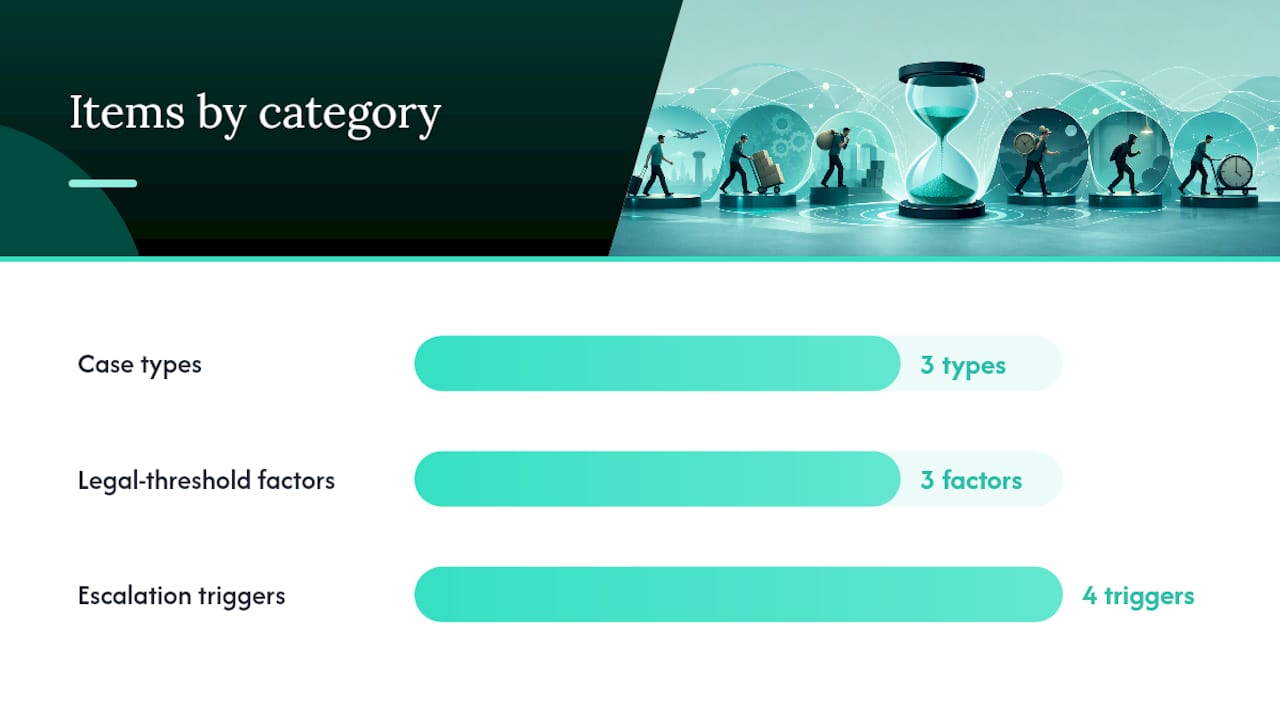
Three case types that illustrate the legal threshold:
- Public-sector contractor fraud. A contractor submits false timesheets for hours never worked on a government project. The falsified records constitute wire fraud or theft of government funds, not just a policy violation. Polk County, Florida, arrested a former firefighter on fraud charges tied to false time reporting, illustrating that public-sector cases move to law enforcement faster than private-sector ones.
- Corporate financial reporting. When falsified time records affect how a company reports labor costs to investors or regulators, the matter can involve SEC enforcement or federal fraud charges, not just an HR termination.
- Payroll embezzlement. A manager who approves ghost shifts for nonexistent employees and diverts the wages is committing payroll fraud, which most states prosecute as felony theft above a dollar threshold.
The legal line is usually crossed when three factors combine: a deliberate pattern (not a single error), falsified records (not just disputed recollections), and material financial harm to the employer, a government entity, or investors.
When to escalate beyond HR:
- The pattern spans multiple pay periods and involves clear falsification
- The total dollar amount meets your state’s felony theft threshold
- A manager or payroll administrator is involved (collusion)
- Government contracts or regulated financial reporting are affected
At that point, preserve all records, stop informal confrontations, and consult employment counsel before taking further action.
What to do if you’re accused or if you uncover suspected fraud
If you are an employee who has been accused:
- Stay calm and ask for the specific allegation in writing, including dates and amounts.
- Pull your own records: clock-in logs, emails, badge swipes, or any corroborating evidence of your actual hours.
- Respond in writing through official HR channels, not verbally in a hallway conversation.
- If the accusation is serious or you believe it is retaliatory, consult an employment attorney before signing anything.
- Do not alter, delete, or “correct” any records after the accusation, even if you believe they are wrong. Any change made after the fact looks like tampering.
If you are an employer who has uncovered suspected fraud:
- Preserve the audit trail immediately. Export logs, lock the relevant pay periods, and save GPS/photo metadata before anyone can edit records.
- Document your findings in a written summary with dates, amounts, and the specific records that support each finding.
- Follow your written disciplinary policy exactly. Deviating from it creates legal exposure.
- Interview the employee fairly, with HR present, and give them a genuine opportunity to explain.
- Hold payroll adjustments until the review is complete. Clawbacks made before findings are confirmed can create wage-dispute liability.
- Apply discipline consistently. If two employees committed the same violation, the same consequence must follow for both.
Evidence to preserve regardless of which side you are on:
- System-generated clock-in/out logs with timestamps and user IDs
- GPS location data and photo verification images
- Timesheet approval records showing who approved what and when
- Any communications (email, messaging apps) referencing the disputed time
A practical note for small-business owners and employees
Most of the time fraud coverage you will find online is written for large HR departments with compliance teams and enterprise software budgets. The reality for a 12-person restaurant or a 20-person construction crew is different. The controls that actually work at that scale are not expensive or complicated.
The single highest-return habit is requiring manager sign-off on every timesheet within 24 hours of shift completion. That one step, more than any software feature, closes the window where most manipulation happens. Pair it with a weekly 15-minute reconciliation of hours logged against a simple output measure (covers served, jobs completed, units shipped), and you will catch most patterns before they compound.
A few less-obvious tips worth adding:
- Run a random spot audit once a month, not just at payroll close. Predictable audit timing is easy to game; random timing is not.
- Review edit history, not just final timesheets. A timesheet that was edited three times after submission tells a different story than one submitted once and approved.
- Set geofence alerts for your highest-risk locations, typically job sites where employees clock in before a supervisor arrives.
Sources
- What Is Time Theft & How Can You Prevent It? Forbes Advisor
- Stop Timesheet Fraud Before It Affects Your Payroll | OnPay
- Time Card Fraud: How to Detect and Prevent It | FirstHR
- 3 employee timesheet fraud cases: the brazen and bold (here) | Pacific Timesheet
- time fraud Sue Butler Lexicographer at large
Recommended
Sources
Every figure on this page traces to one of these. Primary law and government sources are listed first.
Written by
Sam TolbertWorkforce Operations Editor
Sam writes about scheduling, shift work, and the software that runs an hourly workforce, what actually saves time on the floor versus what just adds clicks.
Keep Reading
Track Hours the Easy Way
Kloqk is a free time clock that handles punches, breaks, overtime, and payroll-ready reports.
Start free