Pass a DOL Audit: Restaurant Time Clock Policies for Managers
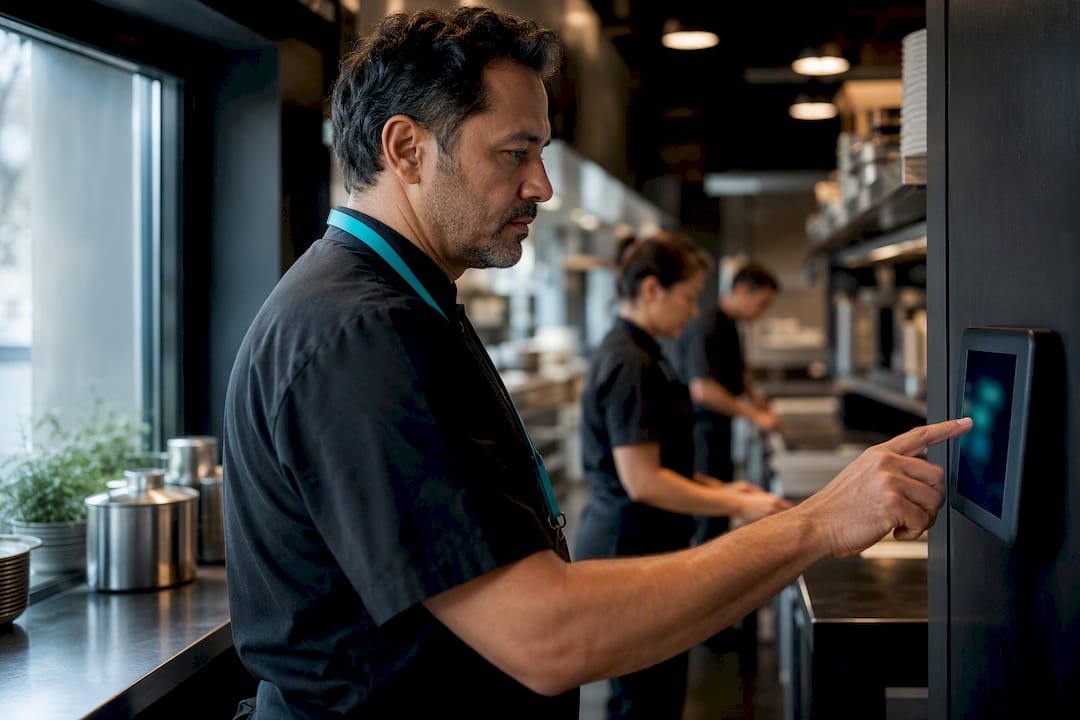
A defensible restaurant time clock policy clearly sets punch windows, break rules, overtime authorization, and an immutable edit trail, and it requires signed acknowledgments and weekly reconciliations. Skip any of those three pillars, and you’re exposed the moment a DOL investigator or an ex-employee’s lawyer asks for records. The policy only works if the paperwork behind it can survive an audit six months from now, not just look good in the handbook today.
TL;DR:
- Validated clock-in policies require clear punch windows, manager-approved early starts, and an immutable audit trail to prevent legal exposure.
- Accurate break tracking differentiates paid rest breaks from unpaid meal periods, especially in states like California with strict documentation requirements.
- Overtime policies must specify pre-approval procedures, include blended and tipped employee calculations, and enforce documentation for any shift extension.
- Combining photo verification, geofencing, and strict logged edits helps prevent buddy punching and time theft, with clear consequences for violations.
- Weekly reconciliation of scheduled and recorded hours, along with signed acknowledgments and logged edits, ensures a defensible record that withstands audits.
Table of Contents
- What Should a Restaurant’s Punch-In and Punch-Out Rules Say?
- How Should Restaurants Handle Meal and Rest Breaks?
- What Are the Overtime Rules Restaurants Need to Follow?
- How Do You Stop Buddy Punching and Time Theft?
- How Do You Roll Out a Time Clock Policy to Staff?
- How Often Should You Audit Restaurant Time Records?
- What Policy Language Should You Actually Copy Into Your Handbook?
- How Kloqk Supports Enforceable Time Clock Policies
- A Manager’s Priority List for Enforcing This Policy
- Try Kloqk for Your Restaurant’s Time Clock Policy
- Sources
- FAQ
What Should a Restaurant’s Punch-In and Punch-Out Rules Say?
Your clock rules need to answer three questions before a single shift starts: when can someone punch in, what happens when they forget, and who can fix a mistake. Vague answers here are exactly where time theft and wage disputes start.
Most restaurants use a short grace period before a scheduled shift, but the exact length depends on your floor rhythms. A brunch spot with a hard 10:00 a.m. open needs a tighter window than a dinner house where prep starts whenever the walk-in delivery lands. Whatever you pick, write it down, and apply it the same way to every shift and every employee.
Early clock-ins deserve their own line. If someone punches in 20 minutes before their shift without manager approval, that time should not roll onto the clock automatically. Require a manager to approve any early start in writing, even if it’s just a text or a note in the system.
Every edit to a time record needs four things attached to it, without exception:
- The original punch value before the change
- The name or ID of the person who made the edit
- A timestamp of when the edit happened
- A written reason for the change
Missed punches happen. Build a short missed-punch form employees fill out that day, not three days later when memory gets fuzzy, and route it to a manager for same-shift approval. Repeated missed punches from the same employee should trigger progressive discipline, spelled out in writing so it’s not applied inconsistently. A restaurant clocking policy that treats every missed punch as a one-off invites the pattern to continue.
Pro Tip: Round grace periods the same direction every time (always toward the scheduled shift start, never toward the employee’s actual arrival). Inconsistent rounding is one of the fastest ways to trigger a wage claim, even when nobody intended to shortchange anyone. Review the specific safe-harbor rounding rules before you finalize the number, since FLSA time rounding rules have their own compliance boundaries.
How Should Restaurants Handle Meal and Rest Breaks?
Paid rest breaks and unpaid meal periods are not the same thing, and treating them the same on a timecard is how restaurants end up owing back pay. Short rest breaks, often lasting a few minutes, count as paid hours worked under federal guidance. Unpaid meal periods only qualify as unpaid when the employee is fully relieved of duty, meaning no expo tickets, no answering the phone, no “just watch the register for a second.”
That duty-free test is the part managers get wrong most often. If a server clocks out for a 30-minute meal break but a manager pulls them back to the floor after 10 minutes, that break is no longer unpaid time. It needs to be paid, and the record needs to show why the break was interrupted.
Your policy should require contemporaneous records for meal breaks or a signed attestation confirming the break was taken or waived. Add a short list of reason codes for anything that goes sideways:
- Break interrupted by manager request
- Break skipped due to staffing shortage
- Break shortened at employee’s own request
- Break waived under a signed on-duty meal agreement
Break compliance data point: Short rest breaks are frequently the ones restaurants mishandle, and tracking them explicitly as paid time removes most of the common legal disputes tied to banked or removed breaks.
If you operate in a state like California, your policy needs extra teeth. California imposes automatic premium pay when a meal or rest break is missed or cut short, and its documentation bar is higher than the federal baseline. If you use on-duty meal agreements or waivers there, store the signed copies where a manager can pull them in minutes, because that’s exactly what an auditor will ask for first.
What Are the Overtime Rules Restaurants Need to Follow?
Overtime policy language should state the workweek plainly, reference the FLSA baseline of 1.5 times the regular rate after 40 hours, and require pre-approval for any shift extension that would push someone over that line. “Ask before you stay” needs to be a rule, not a suggestion, because unapproved overtime is one of the fastest ways a labor budget quietly bleeds out.
Build pre-approval into the schedule itself. A manager who sees a server closing in on 38 hours by Thursday should flag it before Friday’s shift gets assigned, not after the fact. When exceptions happen anyway, document them the same day, with a reason attached.
Multi-rate employees complicate the math. A cook who also bartends two shifts a week earns a blended overtime rate based on hours at each pay rate, not a flat calculation off either job alone. Tipped employees add another layer: your records need to show the base wage, the tip credit claimed, and total hours, because DOL guidance on tipped overtime calculations is specific about what a wage audit expects to see.
Your policy should require:
- A written pre-approval step before any shift extension near the 40-hour mark
- A same-day documentation rule for any unapproved overtime that does occur
- A weekly check comparing scheduled hours against actual punches, flagging anyone near 40
- Tip-credit and multi-rate fields captured on every payroll run, not reconstructed after the fact
Deeper guidance on structuring multi-rate calculations lives in our FLSA overtime rules guide, which walks through blended-rate math step by step.
How Do You Stop Buddy Punching and Time Theft?
Buddy punching costs restaurants real money, and the fix is mostly cheap. Photo verification at clock-in confirms the person punching in is actually the person scheduled. A PIN or badge check adds a second layer at kiosk stations. Geofencing, where it fits your operation, stops someone from clocking in from their car in the parking lot or, worse, from home.
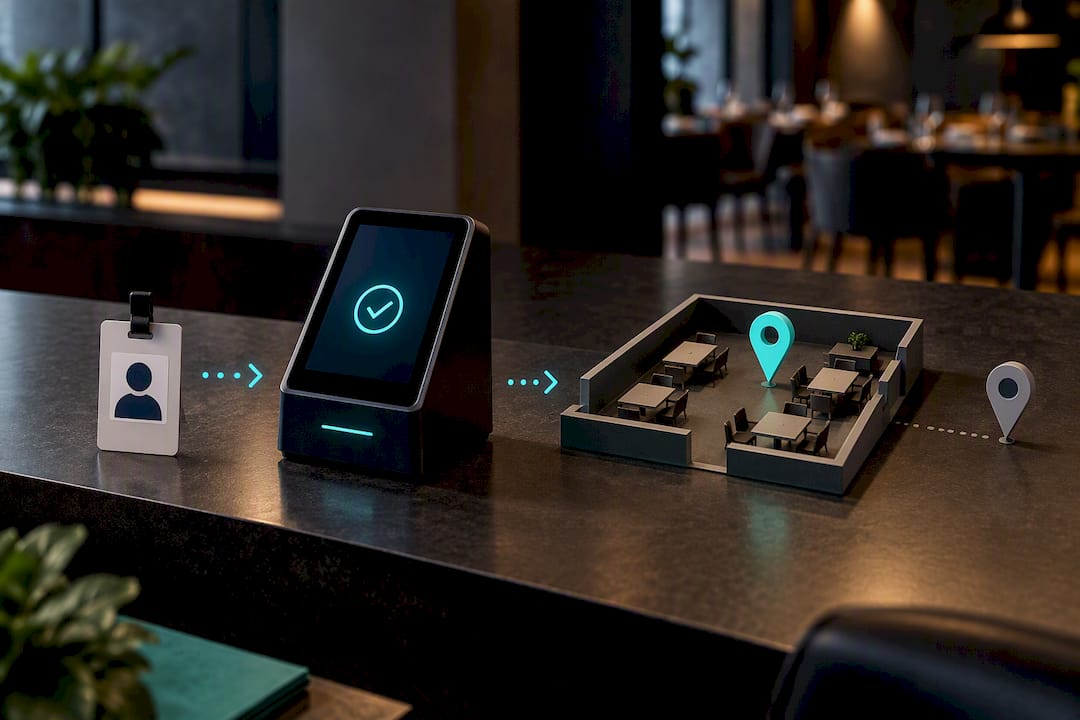
Manager overrides need hard limits. If a manager can bypass verification whenever they want, verification is decorative. Restrict override authority to specific documented situations, like a broken kiosk, and log every override the same way you log a timecard edit.
Your handbook language should state plainly that punching in or out for another employee is grounds for termination, no gray area. Pair that with a short list of exceptions that require written manager sign-off, such as a documented equipment failure.
- Photo verification on every clock-in and clock-out
- PIN or badge confirmation at shared kiosk terminals
- Geofencing for locations where off-site punching is a real risk
- A written no-buddy-punching clause with termination as the stated consequence
Set automated alerts for the patterns that usually signal a problem before a full investigation is warranted: repeated early clock-ins from the same employee, shifts left open for hours after close, or shifts that run unusually short or long compared to the schedule.
Pro Tip: Don’t wait for a suspicious pattern to show up in a manual review. A restaurant time clock app that flags these patterns automatically catches problems in days instead of a full pay period.
How Do You Roll Out a Time Clock Policy to Staff?
A policy nobody signed is a policy you can’t enforce. Rolling it out correctly takes a handful of concrete steps, done in order:
- Publish the full policy in the employee handbook, in plain language, not legal shorthand.
- Collect a signed acknowledgment from every employee, and store those signatures somewhere a manager can retrieve them in minutes.
- Train every manager on FLSA basics, how to log an edit correctly, and the exact missed-punch process, before they’re allowed to approve one.
- Retrain the whole team annually, or immediately whenever the policy changes.
- Give managers a short coaching script for the first violation and a clear escalation path for repeat ones, so discipline doesn’t vary by who’s on shift.
Skipping the signed acknowledgment step is the most common gap. Without it, you can’t prove an employee knew the rule existed the day they broke it.
How Often Should You Audit Restaurant Time Records?
Weekly reconciliation is the single most effective habit a restaurant can build into its payroll process. Comparing scheduled hours against recorded punches every week, before payroll runs, catches both honest missed punches and deliberate padding while it’s still cheap to fix. Waiting until a quarterly audit means the money’s already gone out the door.
| Review type | Frequency | What it checks |
|---|---|---|
| Punch reconciliation | Weekly, pre-payroll | Scheduled vs. recorded hours, flagged exceptions |
| Sample edit audit | Quarterly | Edit patterns, missed-break rates, tipped-wage math |
| Access and retention review | Quarterly | Who can edit records, retention schedule compliance |
Beyond the weekly check, run a quarterly sample audit that looks at who’s editing records and how often, how frequently breaks are getting missed, whether tipped-worker calculations are holding up, and who has access to alter historical data. Best-practice guidance for restaurant timekeeping points to immutable edit trails with mandatory reason codes as the difference between a defensible record and a liability.
- Require every edit to log a reason code, no exceptions
- Set a retention schedule that covers both core time records and supplementary documents like waivers
- Keep the edit log itself immutable, meaning nobody, including managers, can quietly overwrite history
The FLSA’s recordkeeping requirements set the floor here. Treat that floor as the minimum, not the target.
What Policy Language Should You Actually Copy Into Your Handbook?
You don’t need to write this from scratch. Here’s language you can adapt directly:
- Clock-in rule: “Employees may clock in no earlier than [X] minutes before a scheduled shift without manager approval.”
- Missed-punch process: “Employees who miss a punch must complete a missed-punch form before the end of the same shift, submitted to a manager for same-day approval.”
- Break attestation: “Employees taking an unpaid meal period must attest, in writing or through the time system, that they were fully relieved of duty for the full period.”
- Progressive discipline: “Repeated missed punches or attendance violations will follow a documented three-step discipline process: verbal warning, written warning, final warning.”
Before payroll runs each week, work through this short checklist:
- Compare scheduled hours against recorded punches for every employee
- Confirm all edits carry a reason code and an editor identity
- Verify signed acknowledgments are on file for every current employee
- Store completed forms and waivers in one central, retrievable location
Customize every clause for your state’s specific break and recordkeeping rules before you publish it. A California location, for instance, needs stronger meal-break language than a template built for federal minimums alone.
How Kloqk Supports Enforceable Time Clock Policies
Kloqk builds the operational side of this policy into the software itself, so managers aren’t reconstructing records by hand after the fact. It’s a free, straightforward time tracking platform built for small U.S. businesses, designed to turn raw punches into payroll-ready hours without extra administrative work.
- Photo verification confirms the person clocking in matches the scheduled employee
- GPS geofencing flags punches attempted outside an approved job site
- Overtime and break calculations run automatically against federal and state rules
- Every edit generates a logged record tied to the person who made it
A Manager’s Priority List for Enforcing This Policy
If you’re short on time, focus here first: immutable logs, weekly reconciliations, and manager training beat chasing every minor timecard edit. Get simple verification in place, photo or GPS, and a working missed-punch process before spending on advanced scheduling tools. None of that requires sophistication. It requires consistency.
The restaurants that survive an audit cleanly aren’t the ones with the fanciest system. They’re the ones where every edit has a reason attached and every manager follows the same rule the same way, every single week. Good records beat good intentions, especially six months after the fact when nobody remembers why a punch got changed.
Saad
Try Kloqk for Your Restaurant’s Time Clock Policy
This software gives you a free way to put every control in this guide into practice, without the paywalls most competitors put around basic compliance features. Photo verification, GPS geofencing, overtime and break calculations, and audit-ready edit logs are all included in the free tier, unlimited employees included, so a policy on paper actually becomes a policy you can enforce on the floor.
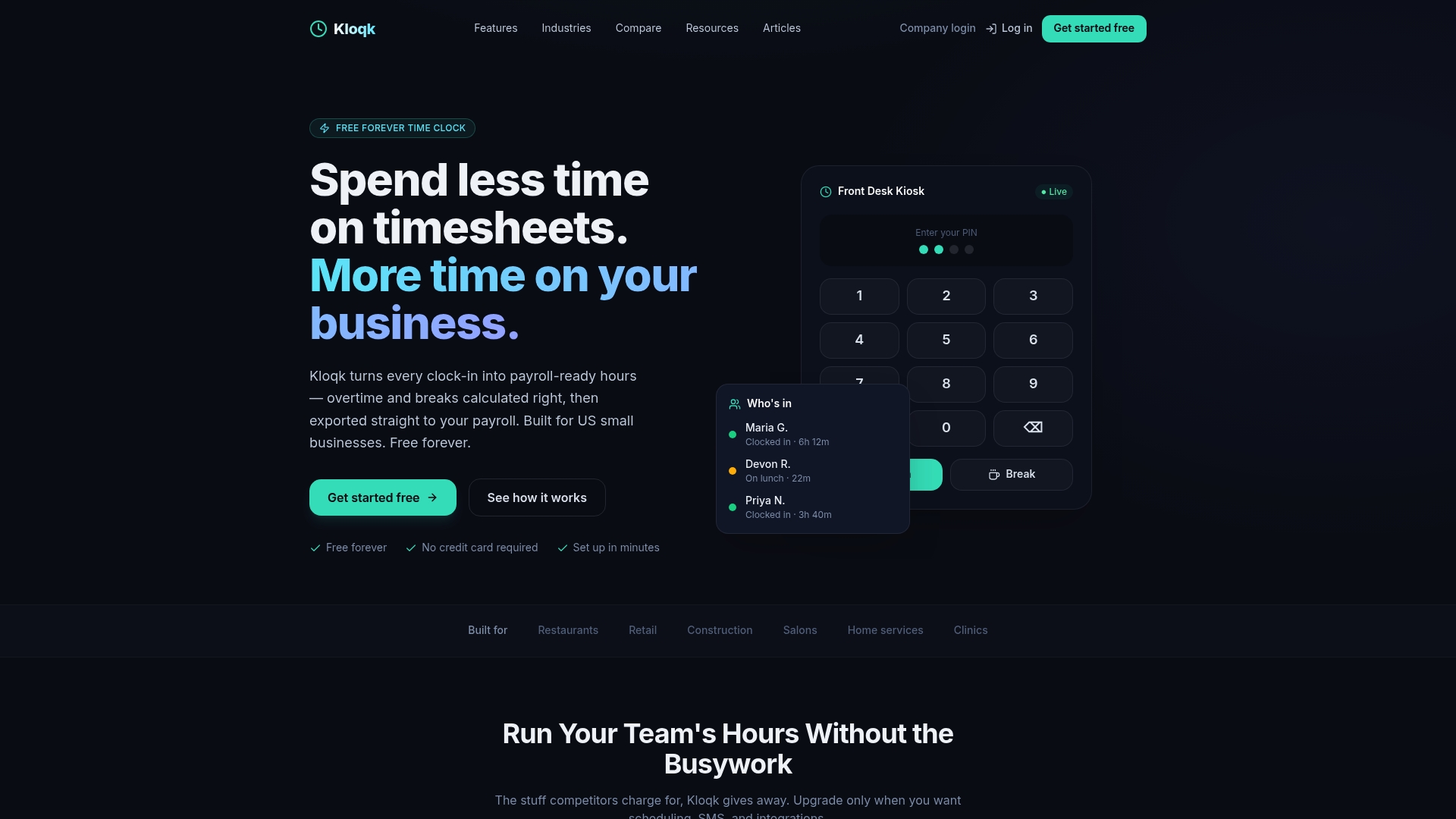
Start with the free employee time tracking features to get punches, breaks, and overtime calculating correctly from day one. If your locations need geofencing to stop off-site punching, check the GPS time clock tools built for exactly that. When you’re ready for scheduling, PTO, or onboarding support on top of the free core, compare the Pro and Premium plans, priced at $29 and $59 per month per location. Set up your account and run your first reconciliation this week.
Sources
- U.S. Department of Labor (WHD) FLSA recordkeeping
- U.S. Department of Labor, overtime calculation examples
- Altametrics, 2026 employee breaks rules for restaurants
- ShiftFlow Restaurant timekeeping compliance checklist
FAQ
Can a Restaurant Legally Require Off-the-Clock Work?
No. Under the FLSA, all time an employee is required to work must be paid, whether or not they’ve clocked in. If a manager asks someone to keep working after they’ve punched out, that time still needs to be recorded and paid, and the DOL’s recordkeeping rules require it to appear on the timecard.
What Is the 30/30/30 Rule for Restaurants?
There’s no single federally recognized “30/30/30 rule” in wage and hour law, and definitions of it vary by source. If you’ve seen it referenced for meal breaks, check your specific state’s break requirements directly rather than relying on that shorthand, since federal law and state law differ substantially on meal break mandates.
What Is the 7-Minute Rule for Clocking In?
The common rounding practice refers to rounding punches to the nearest quarter hour, with small amounts of time rounded down or up. It only holds up under federal safe-harbor rules if it’s applied consistently in both directions, never systematically in the employer’s favor.
Can a Manager Talk to an Employee About Work While They’re Off the Clock?
If the conversation involves the employee performing work, answering scheduling questions, or handling job tasks, that time generally counts as compensable and needs to be recorded. A quick social greeting doesn’t count, but anything resembling actual job duties should get logged, even briefly, to stay consistent with the immutable audit trail practices this guide recommends.
Does Kloqk Cost Anything to Use for Time Clock Policy Enforcement?
Kloqk’s core time tracking features, including overtime calculations, break tracking, and photo verification, are free with no published limit on employees. Paid upgrades for scheduling, PTO, and hiring tools are available on the Pro and Premium plans at $29 and $59 per month per location.
Recommended
Sources
Every figure on this page traces to one of these. Primary law and government sources are listed first.
- 1. U.S. Department of Laborprimary
- 2. U.S. Department of Laborprimary
- 3. altametrics.com
- 4. shiftflow.app
Written by
Marcus ReyesPayroll & Timekeeping Specialist
Marcus covers payroll accuracy, timesheets, and time tracking, the unglamorous mechanics that keep paychecks correct and audits painless.
Keep Reading
Track Hours the Easy Way
Kloqk is a free time clock that handles punches, breaks, overtime, and payroll-ready reports.
Start free