Technicians: 5 Steps to Sync Scheduling into Timesheets for FLSA

Yes, automate schedules into pre-filled timesheets, and prioritize a roster-reconciled API or native sync when one is available. This approach turns planned shifts into a starting template for actual hours worked, cutting payroll errors and creating an audit trail that supports FLSA recordkeeping requirements. When native or API options aren’t ready, calendar sync or a well-formatted CSV import can work as a fallback while you test with a pilot group.
TL;DR:
- Native or API integrations provide the most accurate and scalable schedule-to-timesheet syncs, supporting full metadata like pay codes and departments.
- Reconcile employee roster data before initial setup to prevent duplicate records and ensure correct identifier mapping across systems.
- Batch imports are suitable for small businesses with simple setups, while real-time webhooks are better for high-volume, multi-location operations needing current data.
- Maintain detailed logs of schedule changes and manual edits to meet FLSA recordkeeping requirements and support audit processes.
- A free sync feature set includes core payroll-ready timesheets, overtime, and photo verification, making automation accessible for small teams.
Table of Contents
- How schedule-to-timesheet syncs actually work
- Choosing the right integration method for your setup
- Setup checklist and field mapping for a clean sync
- Handling exceptions when the schedule and reality don’t match
- What FLSA recordkeeping requires from a synced system
- How Kloqk fits into a schedule-to-timesheet workflow
- What a realistic rollout looks like
- Try a free sync-friendly timesheet setup
- FAQ
- Sources
How schedule-to-timesheet syncs actually work
A sync takes each planned shift and drops it into the timesheet as a row marked “planned” rather than confirmed. Once an employee clocks in and out, or a manager approves the actual hours, that row updates to reflect what really happened. The schedule becomes the first draft, and attendance data fills in the rest.
This single-source approach matters because scheduling and time tracking often live in separate systems that never talk to each other. That gap creates duplicate entry and mismatches between what was planned and what employees were actually paid for, a problem we cover in more detail in our piece on scheduling and time tracking integration. Syncing the two closes that gap and reduces the back-and-forth that normally happens before payroll runs.
Timing is the other variable. Real-time syncs using webhooks push changes the moment they happen, which keeps timesheets current but adds complexity to monitor and maintain. Scheduled batch imports, run every few minutes or hourly, are simpler to manage but introduce a short lag between a schedule change and its appearance in the timesheet. Most small businesses do fine with batch imports; higher-volume or multi-location operations tend to need the real-time option.

Choosing the right integration method for your setup
Not every business needs the same connection type, and picking the wrong one creates more cleanup work than it saves.
- Native connectors offer the fastest setup and usually preserve metadata like job codes and pay types automatically, since they’re built for a specific pair of systems.
- API or webhook imports give you full control over field mapping and scale well, which makes them the strongest choice when compliance accuracy matters most. Oracle’s Time and Labor platform, for example, documents a REST-based schedule import process using structured scheduleRequests payloads that include shift start and end times, pay codes, and department attributes, so imported shifts arrive ready for payroll.
- Calendar sync (Google or Outlook) is lightweight and easy to set up but typically carries only basic shift times, without the metadata needed for pay code or department mapping.
- CSV import works as a universal fallback when no direct connection exists, but it requires careful formatting to keep employee IDs and date fields intact; a single mismatched identifier can throw off an entire batch.
Vendor integration guides often recommend pulling a roster export and reconciling identifiers before connecting any method, which sets up the next step regardless of which integration path you choose.
Setup checklist and field mapping for a clean sync
Before any data moves, get the foundational pieces right. Skipping roster reconciliation is the single most common reason syncs produce duplicate or orphaned records.
- Reconcile your roster first. Match employee emails or ID numbers between the scheduling system and the timesheet platform so every record has a clear destination.
- Map the required fields. At minimum, align employee ID, date, start and end times, unpaid break windows, time type or pay code, and department or job code.
- Standardize time zones and daylight saving rules. If your scheduling and timesheet systems handle time zones differently, shifts near midnight or during DST transitions can land on the wrong day.
- Run a pilot with a small team. Validate that hours, breaks, and pay codes come through correctly before rolling out company-wide.
- Keep a rollback plan. Maintain import logs or restore points so you can reverse a bad sync without manually rebuilding timesheets.
Our guide to multi-shift scheduling and payroll setup walks through field mapping in more depth if you’re handling split shifts or overlapping roles.
Pro Tip: Run your pilot during a short pay period, like a single week, so you catch mapping errors before they compound across a full cycle.
Handling exceptions when the schedule and reality don’t match
No sync runs perfectly clean. Missed clock-ins, late starts, early departures, overlapping shifts, and manual edits all need a defined path instead of ad hoc fixes.
- Flag exceptions automatically so they surface in a review queue rather than slipping into payroll unnoticed.
- Require confirmation for anything beyond a small threshold, such as a shift that starts more than 15 minutes late.
- Route exception reports to employees first, then to managers for edits, with a reason logged against every change.
- Let small, rule-based adjustments process automatically, but hold significant deviations for human review before they reach payroll.
This tiered approach, automatic acceptance for minor variances and manual approval for larger ones, keeps the sync fast without letting errors through unchecked. Our article on why accurate timesheets reduce workplace disputes covers how documented reconciliation steps protect both employees and employers when disagreements come up later.
What FLSA recordkeeping requires from a synced system
A sync is only as good as the records it leaves behind, and federal recordkeeping rules set a clear floor. The Department of Labor’s FLSA recordkeeping fact sheet states that records used for wage computations should be kept for two years, while payroll records generally need to be kept for three years.
Retention periods differ by record type under the FLSA: wage computation records for two years, payroll records for three years. (U.S. Department of Labor) That distinction matters when deciding how long to keep raw import logs versus final payroll summaries.
What to capture: daily start and stop times, total hours worked daily and weekly, wage computations, and a history of schedule changes. Fixed schedules can substitute for daily logs under 29 CFR Part 516 but only when deviations are recorded separately with exact hours. Keep import logs and manual-edit comments alongside the timesheet data itself so an audit has a full trail to follow, a practice also covered in our FLSA time rounding rules guide.

How Kloqk fits into a schedule-to-timesheet workflow
Once schedule data is mapped and exceptions are flagged, the final step is turning confirmed hours into payroll-ready output, and that’s where free time clock features come in. The platform can handle overtime and break calculations automatically, with photo verification and GPS geofencing to confirm that clock-ins match the person and location on record.
Getting started follows the same checklist outlined above:
- Prepare your roster export with matching employee identifiers before connecting any system.
- Map schedule fields like start time, end time, and pay code inside our app’s setup flow.
- Run a small pilot group first, then review the output against expected hours.
- Turn on audit logging and confirm your payroll export format matches what your provider expects.
Our employee time tracking feature page walks through payroll export options in more detail, and if you’re exporting into QuickBooks specifically, this payroll integration resource covers formatting requirements on that end.
What a realistic rollout looks like
Automation cuts payroll errors, but it doesn’t eliminate the upfront work of mapping fields and reconciling your roster correctly the first time. Favor an API or native integration when you have more than a handful of employees or multiple pay codes; calendar sync or CSV import are fine for smaller, simpler setups. Most small teams can pilot a sync in one to two weeks, while mid-sized teams with more departments or shift types often need two to six weeks to iron out exceptions.
Saad
Try a free sync-friendly timesheet setup
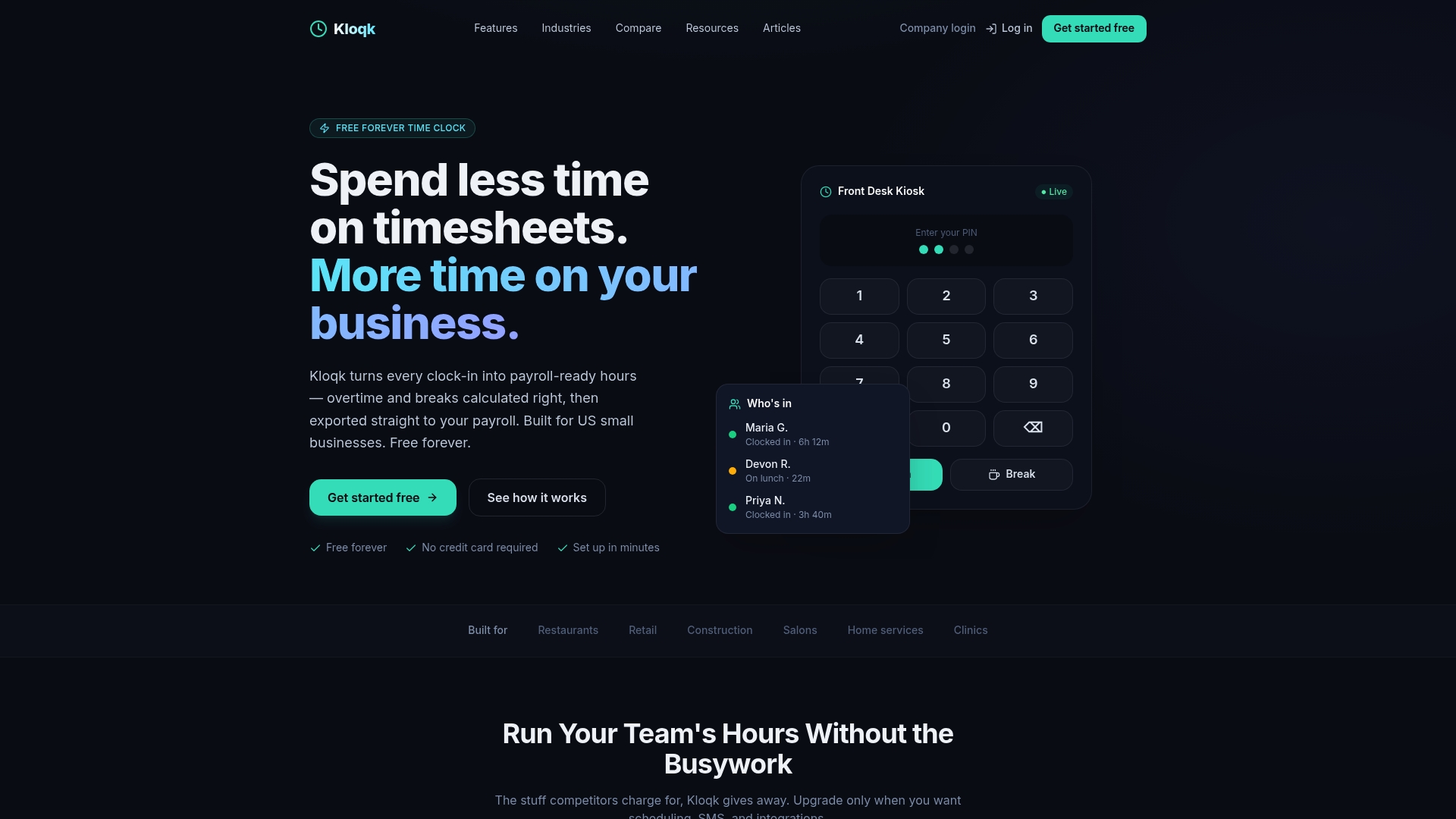
A free plan is available so small businesses can run the workflow described above without paying for key features. Unlimited employees, overtime and break calculations, and photo verification are included at no cost, while competitors often put those behind a paywall.
- Sign up and import a small roster first, the same way you’d pilot any sync.
- Map your schedule fields inside the app and run a short test period before going live.
- Check our pricing page if you later want scheduling, PTO, or GPS features bundled into Pro or Premium.
If GPS tracking or buddy-punch prevention matters for your team, our remote time tracking and geofencing features are built into the same free core, ready whenever your pilot is.
FAQ
What does “schedule as timesheet template” mean?
It means the planned schedule populates the timesheet in advance, with each shift appearing as a draft entry until actual clock-in and clock-out data confirms it. This reduces manual entry and gives managers a baseline to compare against real attendance.
Should I use an API integration or just import a CSV?
An API or native integration is better when you need consistent field mapping, payroll metadata, and scale, since it handles updates automatically. A CSV import works as a fallback for smaller teams or one-time migrations, but it requires careful formatting to preserve employee IDs and avoid mismatches.
How long do I need to keep synced timesheet records?
Under FLSA recordkeeping rules, records used for wage computations should be kept for two years, while payroll records generally need three years of retention. Keeping import logs and manual-edit history alongside these records supports audits if questions come up later.
What should I do when a schedule and actual hours don’t match?
Flag the discrepancy automatically, route it to the employee for confirmation, and have a manager review and log the reason for any edit. Minor deviations can often be accepted automatically, but larger gaps should require manual approval before they reach payroll.
Does Kloqk support syncing schedules into timesheets for free?
Our free plan includes payroll-ready timesheets, overtime and break calculations, and photo verification at no cost, which covers the core steps needed to turn confirmed hours into payroll output. Scheduling and PTO features are available as optional upgrades on our Pro and Premium plans.
Sources
- Fact Sheet #21: Recordkeeping Requirements under the Fair Labor Standards Act (FLSA) | U.S. Department of Labor
- eCFR :: 29 CFR Part 516 Subpart A General Requirements
- Manage Schedule Creation | Oracle Fusion Time and Labor
Recommended
Sources
Every figure on this page traces to one of these. Primary law and government sources are listed first.
- 1. U.S. Department of Laborprimary
- 2. Electronic Code of Federal Regulationsprimary
- 3. docs.oracle.com
- 4. docs.gusto.com
Written by
Marcus ReyesPayroll & Timekeeping Specialist
Marcus covers payroll accuracy, timesheets, and time tracking, the unglamorous mechanics that keep paychecks correct and audits painless.
Keep Reading
Track Hours the Easy Way
Kloqk is a free time clock that handles punches, breaks, overtime, and payroll-ready reports.
Start free