What Is a Missed Punch Policy? A Practical Definition for Employers

A missed punch policy is the written procedure your business uses to catch, verify, and correct time entries employees forget to record before payroll runs. The rule underneath it is non-negotiable: you must pay non-exempt employees for every hour they actually worked, even when the clock shows nothing. The FLSA doesn’t care whether a punch got missed. It cares whether the work happened.
A solid policy gets you three things:
- Accurate paychecks that match actual hours worked, not guesswork
- A documented audit trail if a wage claim or audit ever surfaces
- Consistent handling so no manager improvises a different rule for a different employee
Key Takeaways
A missed punch policy works because it pairs a mandatory pay-for-work rule with a fast, documented correction process that closes before payroll runs.
| Point | Details |
|---|---|
| Pay comes first | Employers must pay for all hours worked even without a punch, per FLSA rules. |
| Fix it same-day | Catch missed punches daily and require employee reporting before shift end. |
| Verify independently | Use schedules, equipment logs, or witness confirmation before approving corrections. |
| Document everything | Keep the original timecard, reason, approval, and audit log entry for each fix. |
| Use the right tools | Kloqk’s photo verification, GPS geofencing, and payroll exports build the correction workflow into the free time clock. |
Table of Contents
- What Counts as a Missed Punch?
- Why Missed Punches Matter for Payroll and Compliance
- What Does the Law Actually Require?
- How Does a Missed-Punch Correction Process Work?
- A Sample Missed Punch Policy You Can Adapt
- Best Practices to Reduce Missed Punches
- What Records Should You Keep for Missed-Punch Corrections?
- A Practitioner’s Take on Missed-Punch Policy
- Let Kloqk Handle the Correction Workflow for You
- Frequently Asked Questions
- Sources
What Counts as a Missed Punch?
A missed punch is any required time entry that never got recorded: a clock-in, a clock-out, a break-out, or a break-in. The most common examples are predictable. An employee rushes in during a busy opening and forgets to clock in. Someone clocks out for lunch but never clocks back in. A closer forgets the final clock-out and the shift just sits open overnight.
Most time-tracking systems flag these automatically because the pair is incomplete: a clock-in with no matching clock-out, or a break-out with no break-in.
- Forgotten clock-in at shift start
- Missing clock-out after a break or at shift end
- An orphaned punch pair the system can’t reconcile
How aggressively your software flags these depends on your settings. A stricter configuration flags a punch missing by even a minute; a looser one tolerates small gaps. Either way, the underlying obligation to pay for hours worked doesn’t change.
Why Missed Punches Matter for Payroll and Compliance
An unresolved missed punch corrupts the paycheck it touches. Overtime calculations run on total weekly hours, so one missing clock-out can quietly push an employee over 40 hours without anyone noticing, or just as easily underpay someone who worked a full shift.
The compliance exposure is real. A payroll record with gaps is a record that can’t prove you paid correctly if a wage-and-hour complaint or Department of Labor audit ever lands on your desk. Recordkeeping requirements under the FLSA exist precisely so employers can show their work.
- Overtime miscalculation from incomplete weekly totals
- Wage claims triggered by missing or inconsistent records
- Hours lost to reconciliation, disputes, and repeated corrections
- Employee frustration when paychecks arrive short or late
Pro Tip: Run a quick daily scan for open punches instead of waiting until payroll day. A five-minute check on Tuesday beats a two-hour scramble on Friday.
What Does the Law Actually Require?
The core legal principle is simple: employers must pay non-exempt employees for all hours actually worked, regardless of whether a punch exists to prove it. This comes straight from DOL guidance on hours worked, and it applies even when the missing record is entirely the employee’s fault.
Compensable time starts the moment productive work begins, not the moment someone remembers to clock in. Federal rules on work suffered or permitted make clear that if you knew or should have known work was happening, you owe pay for it. Truly insignificant preliminary tasks can fall outside this, but once real work starts, every minute counts.
One thing employers cannot do: dock pay or withhold wages as punishment for a missed punch. That crosses directly into FLSA violation territory, no matter how frustrating the pattern gets.
- Pay for all verified hours worked, full stop
- Never treat a missed punch as grounds to shortchange a paycheck
- Keep a documented reason and approval for every correction
- Retain records per DOL recordkeeping standards
Pro Tip: Note the verification method on every correction, whether it’s a manager’s memory, a security log, or a coworker’s confirmation. That one line of documentation is what protects you later.
How Does a Missed-Punch Correction Process Work?
A missed-punch correction process needs a deadline, a reporting method, a verification step, and a sign-off. Skip any one of those and corrections pile up until payroll closes and something gets missed for real.
- Catch it early. Review open or incomplete punches daily, not weekly.
- Have the employee report it same day. They should note the approximate time, which punch was missed, and why.
- Verify independently. Managers can check shift schedules, security or equipment logins, or a coworker’s account of the shift.
- Get manager approval. No self-approved corrections. A second set of eyes signs off before the entry locks in.
- Log it in the system with a reason code, so the audit trail shows what changed and why.
- Include it in the current pay period whenever possible. If payroll has already closed, process it as an off-cycle adjustment rather than folding it into next period’s hours.
Pro Tip: Automated alerts for open punches, paired with a self-service correction request the employee submits from their phone, cut the back-and-forth dramatically. Fewer emails, faster fixes.
A Sample Missed Punch Policy You Can Adapt
Here’s a compact template built around the workflow above:
Missed Punch Policy. A missed punch is any required clock-in, clock-out, or break punch that was not recorded. Employees must report a missed punch to their manager by the end of the same shift, noting the approximate time and reason. Managers verify the reported time using available records (schedules, equipment logs, witness confirmation) and approve or adjust the entry within the current pay period. All corrections are logged with a reason and manager signature. Employees will be paid for all verified hours worked regardless of punch status.
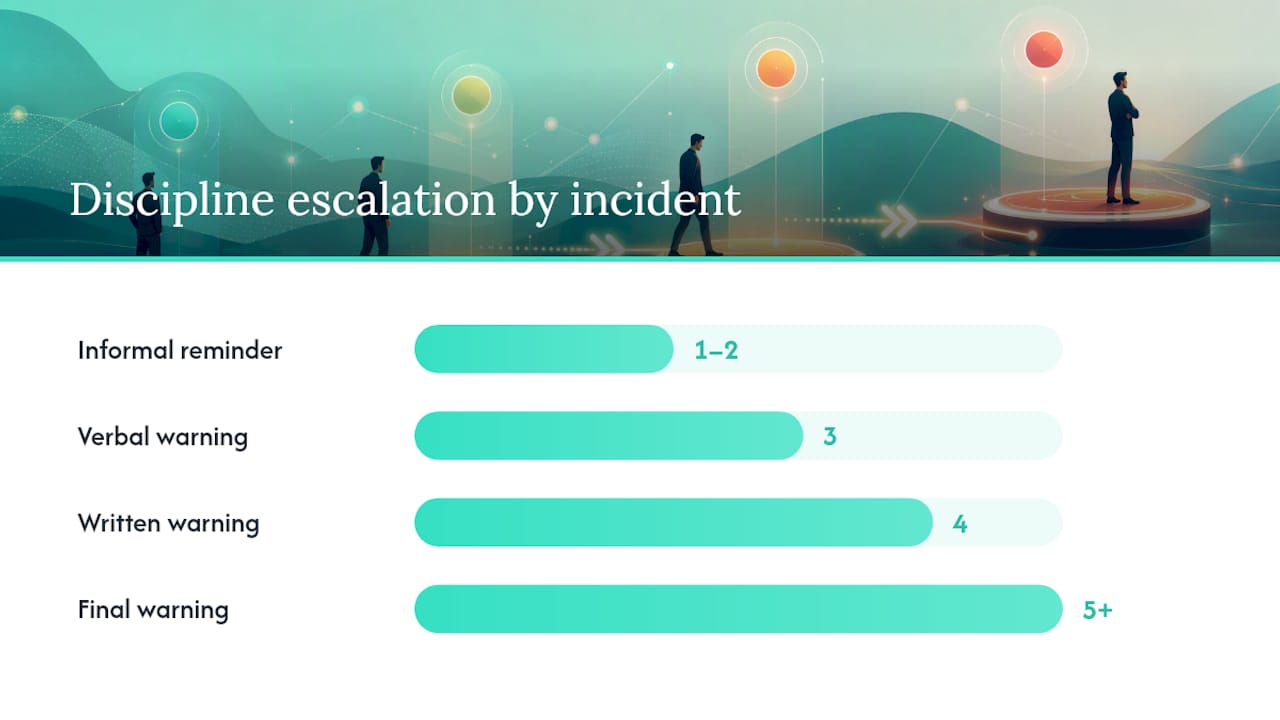
For repeated misses, tie discipline to a consistent, objective trigger rather than manager discretion. That consistency matters more than the specific numbers you choose.
| Incident Count | Action |
|---|---|
| 1st to 2nd missed punch | Informal reminder, no formal record |
| 3rd missed punch | Verbal warning, documented in file |
| 4th missed punch | Written warning with improvement plan |
| 5th or more | Final warning, up to further action |
System outages, power failures, and genuine emergencies aren’t the same as a forgetful employee. Build an exception clause into the policy that lets managers waive the count when the missed punch was clearly outside the employee’s control.
Best Practices to Reduce Missed Punches
Most missed punches trace back to habit, not defiance. A short onboarding walkthrough on how and where to punch, plus a visual reminder posted at the actual clock-in point, fixes a surprising share of them before they start.
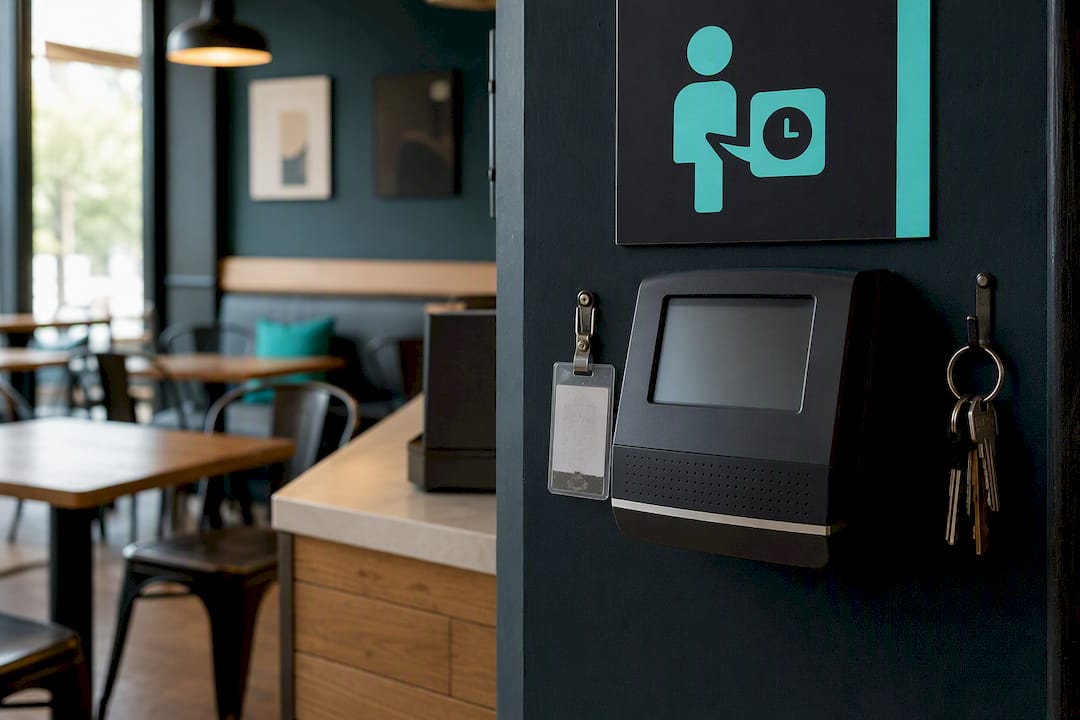
Technology closes the rest of the gap. Mobile self-service lets employees fix a punch from their phone instead of waiting for a manager. Push notifications catch an open shift before it becomes a payroll headache. Photo verification and GPS geofencing confirm who clocked in and where, which matters as much for buddy punching as for honest forgetfulness.
When evaluating any system, prioritize three things: an audit log that timestamps every change, a manager-approval step that can’t be skipped, and clean payroll exports so corrections don’t require manual re-entry. Kloqk builds photo verification, GPS tracking, and payroll-ready exports into its free plan, which maps directly onto the correction workflow above rather than adding a separate tool on top of it.
- Post punch instructions at the physical or digital clock-in point
- Enable mobile correction requests instead of paper timecards
- Turn on automatic pairing checks that flag incomplete punches same-day
- Require photo or GPS verification for remote or multi-site teams
What Records Should You Keep for Missed-Punch Corrections?
Every correction needs a paper trail, even if that trail lives entirely inside your time-tracking software. Keep the original (incomplete) timecard, the stated reason for the correction, the employee’s confirmation, the manager’s approval, and the system’s audit log entry showing what changed and when.
DOL recordkeeping guidance points to standard payroll retention practices, and most employers keep these records for at least three years. Centralize everything in your time system rather than splitting digital punches from paper correction slips. A note attached directly to the timecard survives an audit far better than a sticky note in a manager’s drawer.
A Practitioner’s Take on Missed-Punch Policy
Treat a missed punch as a paperwork problem first, not a character flaw. Most employees who forget to clock in aren’t stealing time, they’re distracted during a rush. Correct it, document it, move on. Save the progressive-discipline steps for genuine patterns, not the third Tuesday in a row someone forgot during a legitimately chaotic shift. Consistency, not severity, is what keeps a policy defensible and keeps your team’s trust intact.
Let Kloqk Handle the Correction Workflow for You
Manually chasing down missed punches, cross-checking shift logs, and re-approving timecards eats hours every pay period that a small business owner doesn’t have to spare. Kloqk builds the entire correction workflow into its free time clock, so nothing gets lost between “employee forgot to clock in” and “payroll runs clean.”
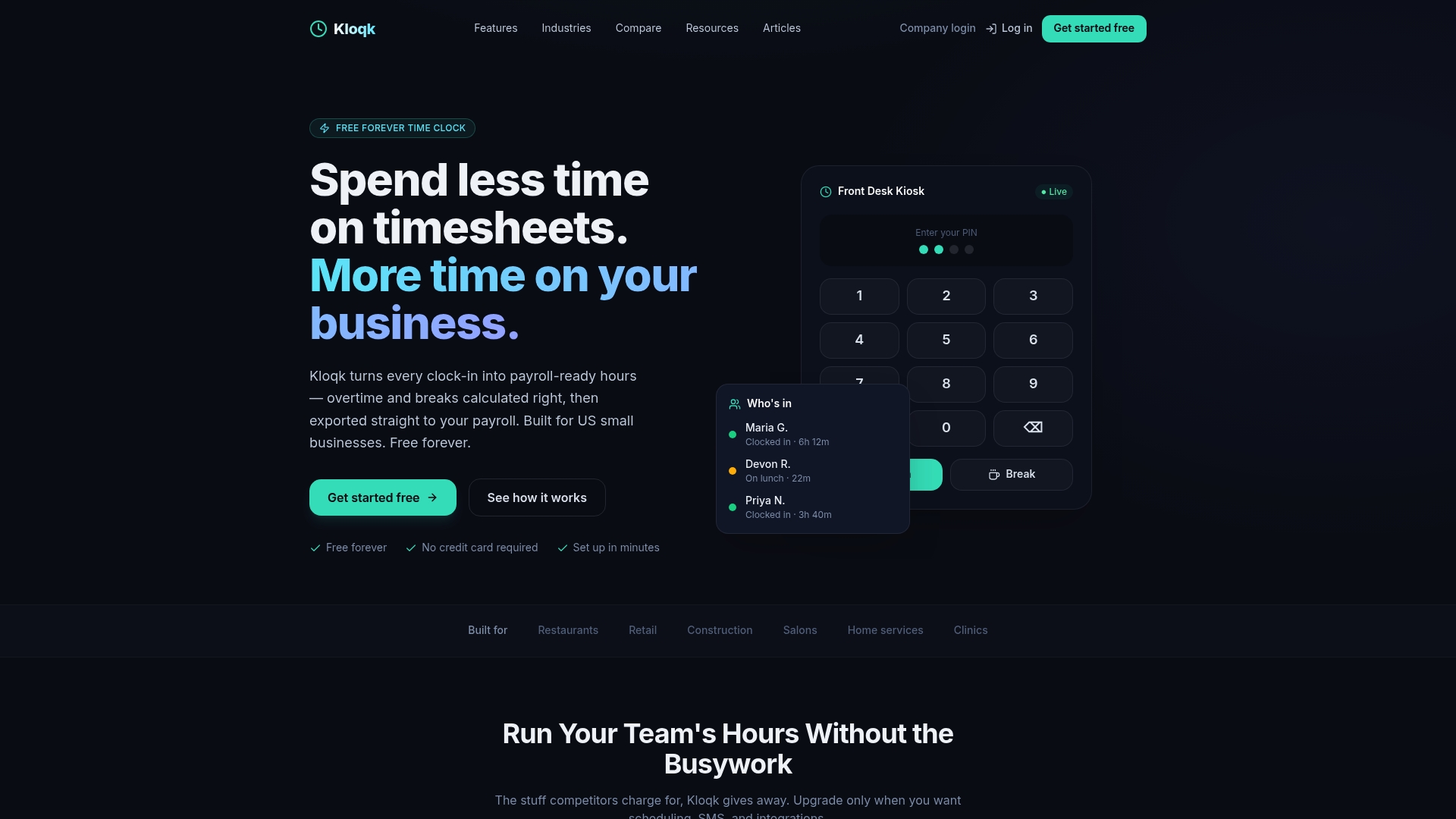
Three features do the heavy lifting: photo verification confirms who actually clocked in when a manager needs to check a disputed entry, GPS geofencing confirms where the punch happened for remote or multi-site crews, and one-click payroll exports mean a correction doesn’t turn into a re-entry project. Every change lands in an audit log automatically, so the documentation piece of your policy handles itself instead of living in someone’s inbox.
If you’re running a restaurant, construction crew, or any hourly team where forgotten punches are a weekly occurrence, Kloqk’s free time-tracking platform is worth setting up before your next pay period closes.
Frequently Asked Questions
What is a missed punch policy? It’s a written procedure defining how your business identifies, verifies, and corrects forgotten time-clock entries before payroll processes, while guaranteeing employees are paid for all hours actually worked.
How does a missed punch policy work in practice? An employee reports the missed punch, a manager verifies the actual time using schedules or logs, approves the correction, and the system records it with a reason code before the pay period closes.
Can an employer dock pay for a missed punch? No. Withholding pay as punishment for a missed punch violates FLSA requirements to pay for all time actually worked.
How long should missed-punch correction records be kept? Most employers retain corrected timecards and approval documentation for at least three years, in line with DOL payroll recordkeeping standards.
What happens if a missed punch isn’t caught until after payroll runs? Process it as an off-cycle adjustment in the next available pay run rather than folding it into a future period’s hours, and document the delay the same way you would any other correction.
Sources
- FLSA, Hours worked (U.S. Department of Labor ELAWS Screener)
- Fact Sheet #21: Recordkeeping Requirements under the FLSA (WHD, DOL)
- 29 CFR § 785.11 Work not requested but suffered or permitted
Recommended
Sources
Every figure on this page traces to one of these. Primary law and government sources are listed first.
- 1. U.S. Department of Laborprimary
- 2. U.S. Department of Laborprimary
- 3. Cornell Legal Information Instituteprimary
Written by
Marcus ReyesPayroll & Timekeeping Specialist
Marcus covers payroll accuracy, timesheets, and time tracking, the unglamorous mechanics that keep paychecks correct and audits painless.
Keep Reading
Track Hours the Easy Way
Kloqk is a free time clock that handles punches, breaks, overtime, and payroll-ready reports.
Start free